

Here's What We're Getting Into
- The Moment You Realize You Have No Idea What You're Doing
- The 4 Pillars That Actually Control Your Timeline
- Exactly When to Book Everything (Finally, Specific Numbers)
- Why Booking Your Wedding 18 Months Out Might Be a Mistake
- The 3 Panic Points That Will Cost You (If You Let Them)
- What You Can (and Should) Put Off Until Later
- How to Time Your Payments So You Don't Run Out of Money
- The Moment You Realize You're Actually Ready
The Moment You Realize You Have No Idea What You're Doing
It's 11:47 PM on a Tuesday. I'm sitting at that coffee shop on Hawthorne—the one with the burnt espresso smell that somehow still manages to be comforting—staring at my laptop screen. There are 17 tabs open. All of them are wedding planning checklists. Every single one contradicts the others. One says "book your venue 18 months out." Another says "12-15 months is fine." A third insists "you can totally find something 6 months before if you're flexible." I want to throw my laptop into the street.
This is the moment. You know the one. When you're engaged, you're excited, and then someone asks "so when's the big day?" and you realize you have absolutely no clue where to even start planning this thing. The sheer volume of decisions hits you like a truck. Venue, photographer, caterer, flowers, dress, suit, invitations, music, transportation, cake, decorations... and that's just the obvious stuff.
There's also the stuff you don't even know you're supposed to be thinking about yet. Like, did you know you need to plan bathroom baskets? Or that some venues require you to use their specific insurance provider? Or that your cousin's gluten-free vegan friend's plus-one might need a special meal?
I've been there. Actually, I'm still there sometimes, and I've helped plan 50+ weddings. The panic is real. It's that feeling that you're going to forget something critical and ruin the entire day. That you'll book the wrong vendor or miss a payment deadline or somehow manage to offend half your family by accident.
What you need is a framework. Not another checklist. A way of thinking about your wedding timeline that actually makes sense, accounts for real life, and doesn't make you want to elope to Vegas tomorrow.
The thing is, most wedding planning advice out there is either so vague it's useless ("start early!") or so specific it's overwhelming ("on Tuesday 17 months before your wedding, at exactly 2:37 PM, you should email three potential florists with these exact questions..."). Neither actually helps when you're staring at that blank spreadsheet wondering where the hell to even begin.
What you need is a framework that accounts for real life and doesn't make you want to elope to Vegas tomorrow. I'm going to give you that framework. But first, let's acknowledge something: the reason this feels so overwhelming is that it IS overwhelming. You're planning a massive event that's also supposed to be deeply personal and meaningful, while trying not to bankrupt yourself or alienate your family. That's a lot. It's okay to feel like you have no idea what you're doing. Because honestly? Most people don't.
The 4 Pillars That Actually Control Your Timeline
Last week, I was at my friend Maria's kitchen table—laptop overheating on my legs, third cup of coffee going cold—trying to help her make sense of her wedding planning. She had this massive, color-coded spreadsheet that was giving me anxiety just looking at it. "I don't know where to start," she said, pushing her laptop away like it had personally offended her. "Everything feels equally urgent."
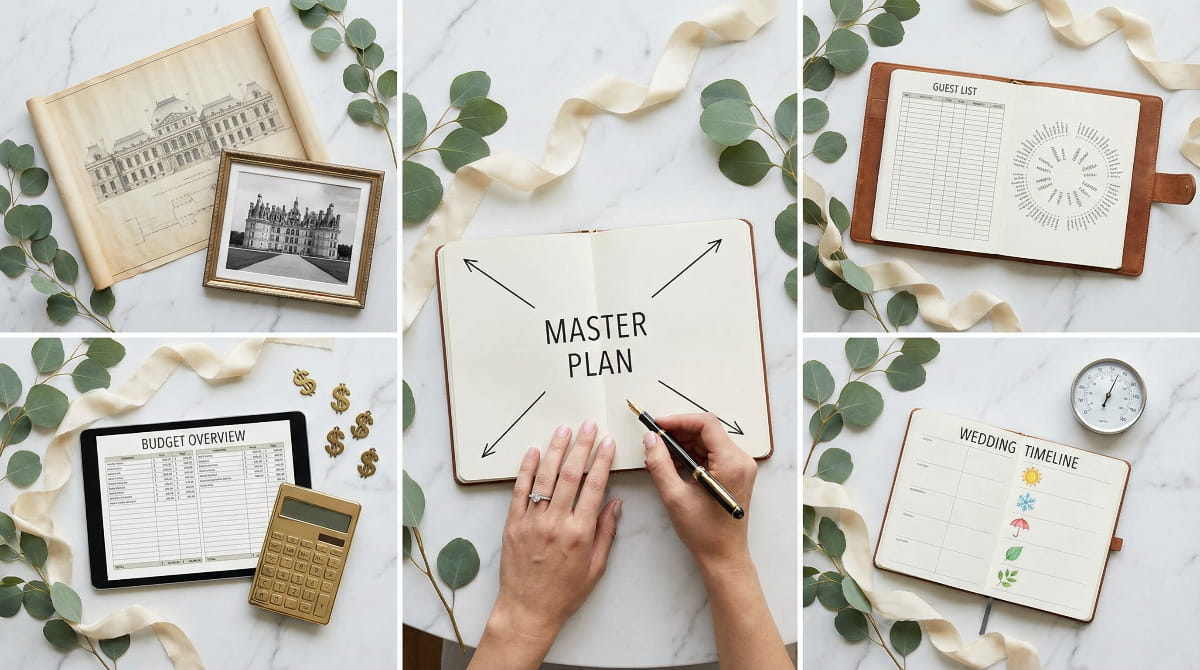
Here's the secret most planning guides won't tell you: everything is NOT equally urgent. In fact, there are really only four things that actually control your entire wedding timeline. Get these right, and everything else falls into place. Screw these up, and you're playing catch-up for the rest of your planning journey.
Pillar One: Venue
This is the non-negotiable starting point. Your venue dictates everything else—your date, your guest count capacity, your catering options, even your decor possibilities in some cases. I've seen so many couples get excited about booking their photographer or dress shopping first, only to realize their dream venue is booked on their preferred date, or can't accommodate their guest list. The venue is the foundation. Without it, you're building a house on sand.
Pillar Two: Guest Count
This isn't just about how many people you want to invite (though that's important too). It's about how your guest count affects literally every other decision. A 50-person wedding? You have way more flexibility with venues, caterers, and timing. A 300-person wedding like my Filipino family would expect? You're looking at a totally different ballgame.
More guests means more lead time needed for bookings, higher costs, and more complex logistics. I've seen couples try to cut their guest list from 200 to 100 three months before the wedding because they finally did the math on what 200 people actually costs. Don't be those people.
Pillar Three: Budget
I know, I know. Nobody wants to talk about money. But your budget directly impacts your timeline in ways most couples don't realize until it's too late. A bigger budget might mean you can afford last-minute bookings or premium vendors who have more flexibility. A tighter budget means you need to plan further ahead to find affordable options, take advantage of early-bird discounts, and possibly DIY some elements.
The timing of your payments also matters—a $5,000 deposit due 12 months out feels very different than $5,000 due 3 months out when you're also paying for your dress and honeymoon.
Pillar Four: Season
This isn't just about "June is popular." Different seasons have different booking patterns, different price points, and different vendor availability. Peak season (May-October in most places) means booking 12-18 months out for popular vendors. Off-peak (November-April) might mean you can book things 6-9 months out and potentially get better rates.
But off-peak also means some vendors might not be available at all, or you might face weather-related challenges that require more planning time.
Here's how these pillars interlock: Let's say you want 150 guests in June in Portland. That's peak season + medium-large guest count. Your venue needs to be booked 12-15 months out. Your photographer? 9-12 months. Caterer? 6-9 months. But if you want the same 150 guests in February? You might be able to book your venue 6-9 months out, though you'll need to plan for indoor/rain backup options. The guest count stays the same, but the season shifts everything.
I've seen couples try to fight these pillars. They want a June wedding with 200 guests but only start planning 6 months out. Or they have a $15,000 budget but want a Saturday evening at the most exclusive venue in town. The pillars don't lie. They're not mean, they're just realistic.
Understanding them doesn't limit your options—it actually gives you more control because you're working WITH reality, not against it. Once you have these four pillars figured out, the rest of your timeline starts to make sense. You can look at any planning decision and ask: how does this fit with my venue availability, guest count, budget, and season? If it doesn't fit, you either adjust the decision or adjust one of the pillars.
Exactly When to Book Everything (Finally, Specific Numbers)
I was at that coffee shop on Division—the one with the terrible parking but amazing pour-overs—listening to my friend Lena freak out. "I just found out my dream photographer is already booked for my date," she said, stabbing at her laptop screen. "But the wedding is 14 months away! How is that possible?"
Here's the thing that pisses me off about most wedding planning advice: they give you these vague timelines like "book early" or "plan ahead" without telling you what "early" actually means. "It depends" is the most useless phrase in wedding planning. Of course it depends—on what? Let's actually break it down into real numbers so you can stop guessing.
Venues: The Non-Negotiable Starting Point
Peak season (May-October): 12-15 months out
Shoulder season (April, November): 9-12 months out
Off-peak (December-March): 6-9 months out
But here's the nuance nobody talks about: this isn't just about the calendar. It's about your specific venue type. That trendy industrial loft in downtown Portland that everyone wants? You're looking at 18+ months out for a Saturday in June, even if it's technically "shoulder season" here. The hotel ballroom that has 20 identical spaces? You might be able to book that 6 months out even for peak season. The key is knowing how unique and in-demand YOUR specific venue is.
Don't be that couple: I worked with a couple who wanted this particular garden venue in the Columbia River Gorge. It was stunning, totally unique, and only did one wedding per weekend. They started looking 11 months before their desired July date. Gone. All Saturdays and Sundays booked solid. They ended up having to either change their date to a Friday (which some guests couldn't make) or pick a different venue entirely.
Photographers: They Book Faster Than You Think
Peak season: 9-12 months out
Off-peak: 6-9 months out
Photographers are often the SECOND thing you should book, right after your venue. Why? Because the good ones—the ones whose style you actually love and who know what they're doing—get booked FAST. I've seen photographers book out 18+ months for popular dates. And unlike venues, photographers can only do one wedding per day. So if you have your heart set on someone specific, don't wait.
The reason photographers book so fast? Their portfolios are everywhere. Instagram, Pinterest, wedding blogs. Couples fall in love with their work and immediately reach out. Plus, photography is one of those things where people are willing to pay more for someone they really trust with their memories. So the demand curve is steep.
Caterers: Tied to Your Venue (Mostly)
Peak season: 6-9 months out
Off-peak: 4-6 months out
Here's where it gets tricky. Some venues have exclusive caterers or preferred vendor lists. If your venue has an exclusive caterer, you might not need to book them until closer to your date because they're guaranteed to be available. But if you're choosing your own caterer, you need to treat them like any other popular vendor—book them 6-9 months out for peak season.
The other factor? Your guest count. A caterer who normally does 100-person weddings might be able to squeeze in your 50-person wedding with shorter notice. But if you're planning 200+ people like a traditional Filipino wedding? You need to give them more time to plan, staff, and source ingredients.
Florists: More Flexible Than You Think
Peak season: 4-6 months out
Off-peak: 3-4 months out
Florists are often one of the later vendors to book, and there's a reason for that. Unlike photographers or venues, most florists can handle multiple weddings per day (especially if they have a team). Plus, flower availability changes seasonally, so there's less benefit to booking super far in advance.
That said, if you want someone specific who's known for elaborate installations or unique designs, you might need to book earlier. My friend Sarah wanted this florist who does these insane hanging flower installations. She had to book her 9 months out for her September wedding because that florist only takes on 2-3 weddings per month.
Everyone Else: The Final Tier
Rentals (tables, chairs, linens): 3-4 months out
Cake baker: 3-4 months out
Hair/makeup artist: 3-4 months out
Transportation: 2-3 months out
Day-of coordinator: 3-4 months out (if separate from your planner)
The key thing to remember is that these timelines shift based on your specific circumstances. Getting married on a holiday weekend? Add 2-3 months to everything. Having a super unique theme or specific requirements? Add time. In a major wedding destination like Napa or Charleston? Everything books faster.
I've seen couples ignore these timelines and still pull off beautiful weddings. But they usually end up paying more for last-minute bookings, compromising on vendors they really wanted, or stressing themselves out trying to find someone available. The numbers I'm giving you aren't arbitrary—they're based on what actually works in the real world, where good vendors get booked and planning takes time.
Stop letting people tell you "it depends." Now you know what it depends on, and you can actually plan accordingly.
Why Booking Your Wedding 18 Months Out Might Be a Mistake
I was having coffee with Jessica, a wedding planner I respect, and she was going on about how couples need to book everything earlier and earlier. "Eighteen months out isn't even early anymore!" she insisted, waving her latte around. "I have couples booking venues two years in advance!"
Here's my hot take: she's wrong. And this obsession with booking everything as early as possible might actually be creating more stress, not less.
Don't get me wrong—there are absolutely things you need to book early. Your venue, your photographer, maybe your caterer if you have specific requirements. But booking EVERYTHING 18 months out? That's not planning ahead. That's asking for decision fatigue, vendor change fees, and potentially locking yourself into choices you'll regret.
I worked with a couple—let's call them Emma and David—who got engaged and immediately started booking vendors. Eighteen months before their wedding, they had their venue, photographer, caterer, florist, band, and even their transportation locked in. They felt so organized, so ahead of the game. Fast forward to 12 months before the wedding, and they hated half their choices. Their color scheme felt dated. The band they loved now seemed too loud for their vision. The florist's style wasn't really what they wanted anymore.
The problem? Tastes change. Wedding trends evolve. What you love when you first get engaged might not be what you love a year later. And when you've put down non-refundable deposits 18 months out, changing your mind gets expensive fast. Emma and David ended up paying $3,200 in change fees and lost deposits to switch vendors they'd booked too early.
There's also the burnout factor. Wedding planning is a marathon, not a sprint. If you make every single decision in the first three months of your engagement, what are you supposed to do for the next year? Sit around and stress about whether you made the right choices? I've seen couples drive themselves crazy second-guessing every decision because they have nothing else to focus on.
The sweet spot for booking:
Book early (12-15 months out): Venue, Photographer, Caterer (if you have specific requirements)
Book medium timeline (6-9 months out): Florist, Rentals, Cake baker, Hair/makeup artist, Transportation
Book later (3-4 months out): Day-of coordinator, Final song lists, Minor decor items
This staggered approach does a few things. First, it spreads out your decision-making so you're not overwhelmed. Second, it gives you time to really develop your vision before committing to details like flowers and decor. Third, it reduces the risk of vendor changes or trend shifts affecting your choices.
I worked with Sarah and Mike who took this approach. They booked their venue and photographer 14 months out, then waited. At 9 months out, they had a much clearer sense of their style and booked their florist and rentals. At 6 months out, they finalized their music choices. They never felt rushed, never paid change fees, and actually enjoyed the planning process.
The key is understanding the difference between foundational decisions (venue, date, photographer) and decorative decisions (flowers, specific linens, song lists). The foundation needs to be set early. The rest can—and often should—wait until your vision is clearer.
Don't let the wedding industry pressure you into booking everything the moment you get engaged. Take a breath. Book the critical stuff early, then give yourself time to figure out what you actually want before committing to the details. Your future self (and your bank account) will thank you.
The 3 Panic Points That Will Cost You (If You Let Them)

I was on the phone with Maria at 11:30 PM on a Tuesday. She was hyperventilating. "Aurora, I just realized we haven't booked a videographer and the wedding is three months away. Everyone I'm calling is either booked or wants double their normal rate. What do I do?"
This is the first panic point, and it's brutal. Maria ended up booking a videographer who charged her $4,200 for a package that should have cost $2,400. She paid it because she was scared, and she felt like she had no choice. She got decent footage, but she could have saved almost $2,000 if she'd planned better.
Panic booking is real, and it's expensive. The wedding industry knows when you're vulnerable, and some vendors absolutely take advantage of that. I've seen good people turn into not-so-great people when they smell desperation.
The second panic point happens around the two-month mark, when couples suddenly realize they haven't planned enough of the "fun stuff" and start panic-upgrading everything. My friend Sarah fell into this trap. Two months before her wedding, she decided her basic floral arrangements weren't enough and upgraded to premium installations. Then she added extra lighting. Then upgraded her photo booth package. Then decided she needed a late-night snack station. What started as a $28,000 budget ballooned to $35,000 in six weeks because of "just one more thing" syndrome.
The third panic point is the "everyone else is booked" fear that hits about 4-6 weeks before the wedding. This is when couples realize they still need little things—transportation for guests, day-of coordination help, maybe some additional decor—and they start calling around only to discover that yes, actually, most good vendors ARE booked at that point.
I worked with a couple who tried to DIY their own centerpieces three weeks before the wedding because they couldn't find a florist with availability. They spent $600 on supplies, worked until 2 AM every night, and ended up with centerpieces that looked like a middle school craft project. They could have hired a professional florist for $800 and gotten something actually beautiful, but they waited too long.
The emotional toll of these panic points is what nobody talks about. Maria cried for two days after overpaying for her videographer. Sarah and her fiancé had their first real fight about money during her upgrade spiral. The DIY centerpieces couple barely spoke the week before their wedding because they were so stressed and sleep-deprived.
For the 3-month "oh crap" panic:
Create a master vendor list with target booking dates when you first start planning. Set calendar reminders for when you should start contacting each type of vendor. If you miss a window, don't panic—adjust your expectations. Maybe you don't need a videographer. Maybe you can find a photographer who offers video as an add-on. Maybe you ask friends to record parts of the day.
For the 2-month upgrade spiral:
Set a "freeze date" for all upgrades and additions. Pick a date (usually 3 months before the wedding) after which you cannot add anything new to your wedding unless you remove something else of equal or greater value. Sarah wished she'd done this—she could have saved $4,000 in unnecessary upgrades.
For the 1-month "everyone's booked" panic:
Prioritize. What actually NEEDS to be done versus what would be nice to have? Transportation for elderly guests? Necessary. Custom signage? Probably not. Focus on the things that will actually impact your guests' experience or your stress levels on the wedding day. Let the rest go.
The key is recognizing these panic points for what they are—emotional responses to feeling overwhelmed, not actual emergencies. When you feel that panic rising, take a breath. Walk away from the planning for a day. Then come back and make a rational list of what actually needs to happen versus what you're scared might happen.
I've seen couples navigate these panic points beautifully. My cousin Maria (different Maria) hit the 3-month panic point about her florist. Instead of immediately booking someone expensive, she took a weekend off from planning. When she came back, she realized she could simplify her floral needs and book a smaller, more affordable florist who had availability. She saved $1,200 and got exactly what she needed.
Planning a wedding is stressful. There will be moments when you feel like everything is falling apart. But most of these panic points are predictable and avoidable if you plan ahead and keep a cool head. Don't let the wedding industry's timeline pressure or your own fear drive you into expensive, stressful decisions.
What You Can (and Should) Put Off Until Later
I was at Michael's craft store with my friend Lisa last weekend. She had a cart full of ribbon, glue guns, fake flowers, and various DIY supplies. "I'm starting my centerpieces now!" she announced, way too excited for someone staring at $200 worth of craft supplies. "The wedding is 8 months away, so I have plenty of time!"
I wanted to shake her. Not because DIY projects are bad—they can be great and save money. But starting centerpieces 8 months before your wedding is a recipe for disaster. I've seen it too many times. Projects get damaged. Tastes change. Life gets in the way. And suddenly you're redoing everything a month before the wedding because what seemed perfect in January looks dated or cheap in September.
There's this pressure in wedding planning to start everything early, to feel like you're making progress. But some things are actually BETTER when you wait. Here's what can—and should—wait until later in your planning timeline:
DIY Projects: Don't Start Them 6 Months Early
I know the temptation is real. You're excited, you want to feel productive, Pinterest is telling you that you need to start crafting immediately. But here's the reality: most DIY projects have a shelf life. Paper goods can yellow. Glue can fail. Flowers (real or fake) can get crushed or dusty. Your vision for your wedding might evolve.
The sweet spot for most DIY projects is 2-3 months before the wedding. You've finalized most of your other decisions, so you know your color scheme and style. You're close enough to the wedding that the projects will stay fresh, but far enough out that you're not cramming everything into the last few weeks.
Don't be Sarah: My friend Sarah made all her table numbers 6 months before her wedding. They were beautiful—gold leaf on black cardstock. But when she unpacked them a week before the wedding, half of them had gotten bent, and the gold leaf was peeling on several. She ended up redoing 30 table numbers the night before her rehearsal dinner.
Finalizing Song Lists: Your Taste Might Change
Your wedding is 10 months away. You create the perfect playlist for your reception. You love every song. Fast forward to 8 months later, and half those songs make you cringe. You've moved on musically. Your relationship has evolved. What felt perfect then doesn't represent you now.
Wait until 2-3 months before the wedding to finalize your music choices. By then, you'll have a clearer sense of the mood you want to create, and you won't be stuck with songs that felt right a year ago but don't resonate anymore.
Minor Decor Decisions: Wait Until the Big Stuff Is Set
I see this all the time. Couples get obsessed with small decor items—place cards, table runners, signage—before they've even finalized their venue layout or major design elements. They buy things that don't match their eventual color scheme. They order custom items in the wrong size. They spend money on decorations they can't actually use.
Wait until you have your venue locked down, your major design elements decided, and your layout finalized before you start buying specific decor items. Usually, this means waiting until 3-4 months before the wedding. You'll save money, avoid returns, and ensure everything actually works together.
My cousin Maria bought beautiful lace table runners 6 months before her wedding. When she finally did her venue walk-through 3 months later, she discovered the tables were round, not rectangular like she'd assumed. The runners were the wrong size and looked ridiculous. She ended up donating them and buying new ones.
Wedding Favors: The Ultimate Last-Minute Item
Nobody needs wedding favors 6 months early. In fact, most favors are best purchased or assembled 1-2 months before the wedding. Why? Food items can expire or go stale. Packaging can get damaged. Trends can change. And honestly, many guests forget or leave favors behind anyway.
I've seen couples spend hundreds of dollars on custom favors 8 months before their wedding, only to realize a week before that they don't even like them anymore or that they don't fit with their final design scheme.
Lisa, my friend from the craft store? I talked her down. She returned most of her supplies and agreed to wait until 3 months before the wedding to start her centerpieces. When she did start them, she had a much clearer vision of what she wanted, and they turned out beautiful. Plus, she saved herself months of stress and potential project failure.
Some things in wedding planning are better when they're fresh—both literally and figuratively. Give yourself permission to wait.
How to Time Your Payments So You Don't Run Out of Money
I was sitting at my kitchen table with my laptop literally burning my legs, staring at a spreadsheet that was giving me anxiety. It wasn't even my wedding—it was budget planning for a client. But looking at all those payment dates, deposit amounts, and final balances was making me stressed. And I do this for a living.
Here's the thing nobody tells you about wedding planning: it's not just about how much you spend, it's about WHEN you spend it. I've seen couples with perfectly reasonable budgets get into trouble because all their big payments hit at the same time, or they didn't plan for the timing of deposits versus final payments.
The Payment Structure: Deposits, Installments, and Final Balances
Most wedding vendors work on a similar payment structure:
• Deposit (usually 25-50%) to secure your date
• Installments (varies by vendor) during the planning process
• Final balance (usually the remaining 50-75%) due 1-4 weeks before the wedding
The problem? If you're not careful, all those final balances can hit within the same month, right when you're also paying for your dress alterations, marriage license, and honeymoon expenses.
I worked with a couple who had a $30,000 budget. They planned everything perfectly, but didn't pay attention to payment timing. Two months before their wedding, they had to pay: Final photographer balance ($2,800), Final caterer balance ($8,500), Final venue balance ($6,000), Final florist balance ($1,200), Dress alterations ($600), Marriage license ($100), Honeymoon final payment ($4,000). That's $23,200 in payments within 60 days. They had to put some of it on credit cards and spent the first three months of their marriage paying off wedding debt instead of saving for their future.
The Payment Timeline Strategy
12-15 months out:
• Venue deposit (typically 25-35%)
• Photographer deposit (typically 50%)
9-12 months out:
• Caterer deposit (typically 25-30%)
• Florist deposit (typically 50%)
6-9 months out:
• First installment for major vendors (if offered)
• Start setting aside money for final payments
3-6 months out:
• Dress payment (if not already paid)
• Second installment for major vendors
• Continue saving for final payments
1-3 months out:
• Final vendor payments (spread these out if possible)
• Marriage license
• Final honeymoon payment
• Any remaining small expenses
The key is asking vendors about their payment schedules when you book them. Some are flexible and will work with you on timing. Others have strict payment policies. Knowing this upfront helps you plan.
Pro tip: I have a couple I'm working with now who are getting married in September. They created their payment calendar and realized August was going to be brutal—over $12,000 in payments. They worked with vendors to move some payments to July and spread out the load. It took some extra coordination, but it's going to make their final month much less stressful.
The bottom line? Wedding planning is as much about cash flow management as it is about choosing the right vendors. Pay attention to when money is due, not just how much you're spending. Your future self (and your bank account) will thank you.
The Moment You Realize You're Actually Ready
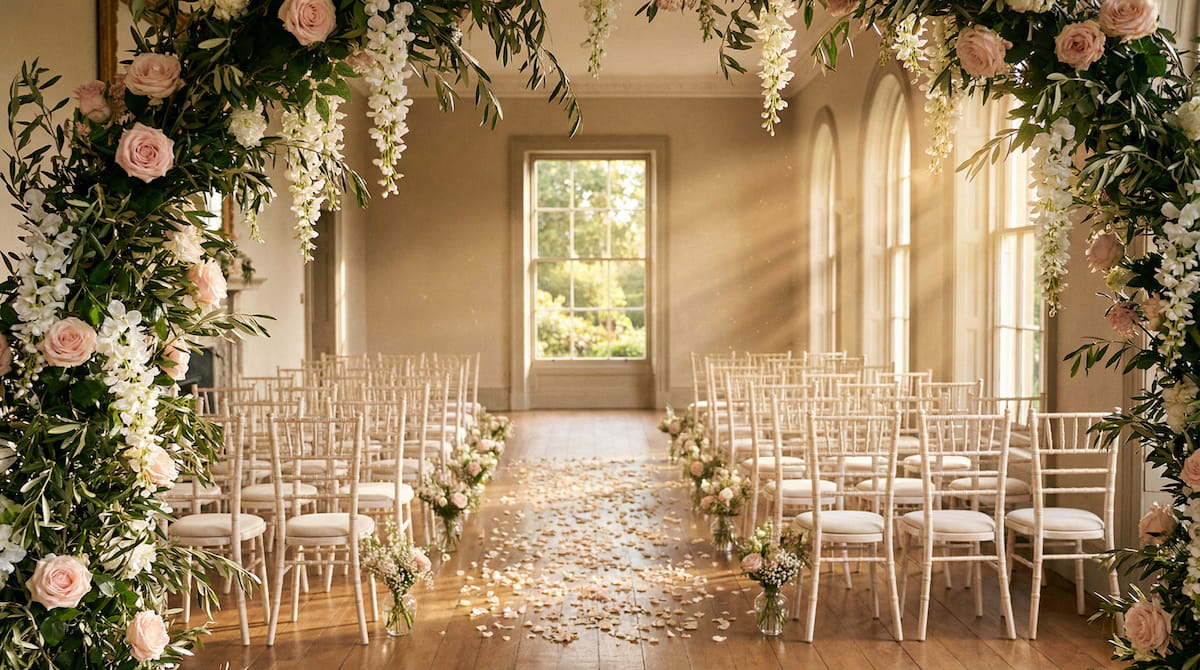
Two weeks before her wedding, I was doing a final walk-through with my cousin Maria at her venue. The late afternoon sun was streaming through the windows, hitting the altar just the way she'd hoped. Her playlist was softly playing in the background as we walked through the timeline one more time.
She stopped in the middle of the room and just looked around. "It's actually happening," she said, not to anyone in particular. "We're actually getting married in two weeks, and everything is... ready."
There's this moment in wedding planning where the panic finally lifts and you realize you've actually done it. You've planned a wedding. All the spreadsheets, all the vendor meetings, all the decisions—they've led to this moment where you can look around and see that it's all coming together.
For Maria, this moment came during her final venue walk-through. Her fiancé was there with the checklist, marking off the last few items. The caterer had just confirmed the final guest count. The florist had sent over mock-ups of the centerpieces. Everything was set.
I've seen this moment happen at different times for different couples. Sometimes it's when they pick up their marriage license and realize "oh my god, this is real." Sometimes it's during their final dress fitting when they look in the mirror and see themselves as a bride. Sometimes it's when they send out their final payments and realize there are no more wedding bills to pay.
The key is that this moment doesn't come until the end. You don't get to experience it until you've gone through all the planning, all the stress, all the decisions. And when it comes, it's this beautiful mix of relief, excitement, and disbelief that you actually pulled it off.
For Maria, there was this specific detail she kept coming back to—the way the light hit the flowers on her altar at 4:30 PM. She'd seen it in photos, but standing there in person, seeing how the golden hour light made everything glow, she knew she'd made the right choices. All the stress about booking windows, payment timing, and vendor decisions had led to this perfect moment.
Her fiancé put his arm around her and they just stood there for a minute, not saying anything. They didn't need to. The look on their faces said it all. They were ready. Not just logistically ready, but emotionally ready. They'd planned this thing together, made decisions together, stressed together, and now they were about to get married.
This is the moment that makes all the wedding planning worth it. When you realize that all those spreadsheets and checklists and vendor meetings weren't just about planning a party—they were about building the foundation for your marriage.
Maria's Filipino family had been pressuring her about every detail for months. The guest list, the food, the music, the timing—everyone had an opinion about everything. But standing there in that venue, with the sun setting and the music playing, none of that mattered anymore. What mattered was that she and her fiancé had created something that was uniquely theirs.
The wedding industry will tell you that this moment should come with a perfect Instagram-worthy photo op. That you should feel like a princess in a fairytale. But the reality is much more grounded and, honestly, much more beautiful. It's the moment when you realize that despite all the stress, all the decisions, all the pressure—you and your partner actually did this together.
That's the real magic of wedding planning. Not the Pinterest-perfect details or the Instagram-worthy moments, but the process of working together, making decisions, and creating something that represents who you are as a couple.
Maria and her fiancé stood there for a few more minutes, taking it all in. Then she turned to me and said, "You know, all that stress about booking windows and payment timing? It was worth it."
And that's really what it comes down to. The planning, the timing, the decisions—they're all just tools to help you create the day you want. And when you get to that moment two weeks before your wedding and realize you're actually ready, you'll understand why all of it matters.
Not because you planned the perfect wedding, but because you planned YOUR wedding. Together.